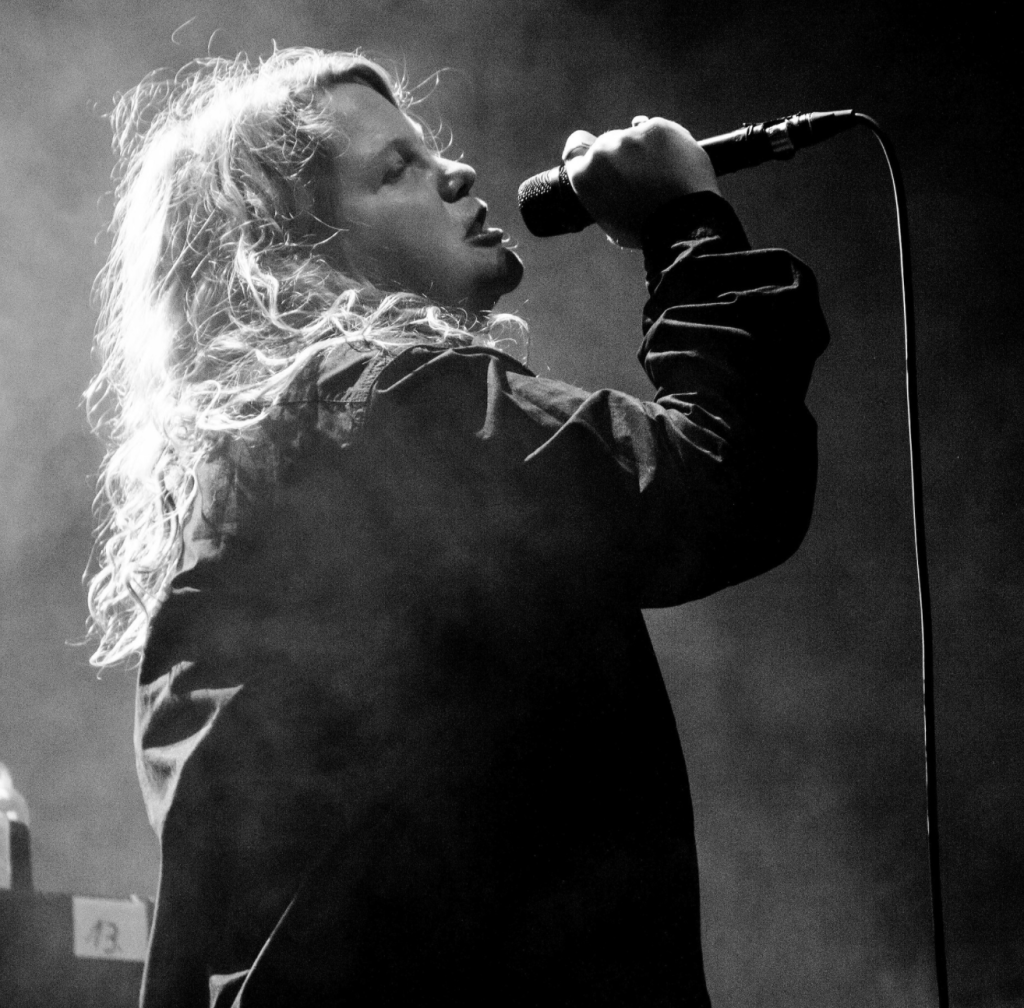
If you invest in just one poetry collection this year, get Brand New Ancients by Kae Tempest. In fact, it is not a collection—rather, a long poem which bounds with vociferous energy over its forty-seven pages. The book begins with an aphoristic inscription: “This poem was written to be read aloud”, and to read it alongside a recording of Tempest’s virtuosic spoken-word performance is enthralling.
The text begins with a meditation on myth:
(Tempest, 2013, p.1)
In the old days
the myths were the stories we used to explain ourselves.
But how can we explain the way we hate ourselves,
the things we’ve made ourselves into,
the way we break ourselves in two,
the way we overcomplicate ourselves?
But we are still mythical.
Note the lexical stride of ‘ourselves’ as it shifts its syntactical position in each line, much like the shifting of our own subjectivity, culture and the passing of time: a civilization taking one step forward and two steps back.
In this next passage, assonant sonority meanders through these phrases like a soundwave where ‘your’/ ‘distorted’ and ‘moss’/’emboss’, ‘rock’/work’ curl subtle filigrees against the more stoic, conventional rhyming of ‘loathing/clothing’ at the lines’ end. Generous, round vowels evoke gravitas and the echo of deep, ancient time:
(Tempest, 2013, p.8)
[. . .] Kevin, your altar is covered in moss,
the inscription distorted, embossed long ago, it said once—
stay true, even if others do not.
He breaks through the rock of his silent self-loathing,
climbs into his clothing
and heads off to work. [. . .]
Tempest is not the first poet to gaze into the antique past, to myth and the Classical world, in order to explain ‘ourselves’. T.S. Eliot’s monolithic poem, The Waste Land (1922), too is a collage of intertexts which crisscross through Dante, Shakespeare, ancient Buddhist scripture, but also popular songs and lewd limericks. Part II of the Waste Land, ‘A Game of Chess’, dramatizes the unhappy marriages of two couples, inflected with allusions to Anthony and Cleopatra, Dido and Aeneas, Elizabeth I and Leicester. Tempest, in her narrative poem, renders the relationships of two families with Eliotian pessimism, but not in the manner of pastiche. Tempest layers her own careful palimpsest of lyric pathos, dramatic epic, and their modern-day reincarnations: street poetry and rap. She glissades easily between speech, recitative and song in stiches so rhythmically complex they defy traditional scansion.
Brand New Ancients is, perhaps, the Waste Land of our age.
 Lisa Mansell
Leave a comment